St Thomas of Canterbury, 21 June 2019

At Bletchley Juniors Codebreaking Club this week we used the Date Shift Cipher. I chose some famous dates from history e.g. Shakespeare’s Date of Death, the Battle of Hastings and The Fall of the Berlin, and turned the date into a repeating keyword. I explained that this was another example of a polyalphabetic substitution cipher.

As an example, the Raising of the Mary Rose was on 11 October 1982. This turns into 111082 when the month is turned into a number and only the last two digits of the year are used. The activity was to decode information about mythological beasts and monsters. To encode, each letter in the plaintext was shifted forwards according to the number in the keyword e.g. for 111082 and Centaur, the C was shifted by 1 to make D; the e by 1 to make f; the n by 1 to make o; the t by 0 so stays as t; the a by 8 to make i; the u by 2 to make k; the r by 1 to make s. So Centaur becomes Dfotikr. Decoding means shifting backwards along the alphabet by the number in the keyword.

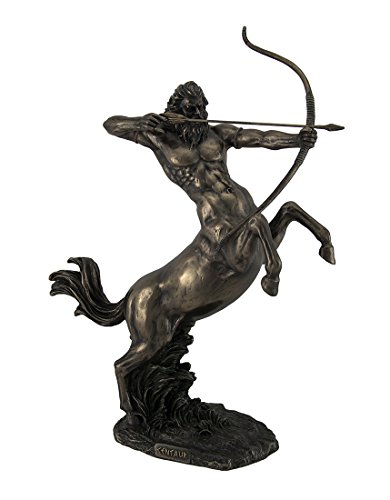
I gave the children a short paragraph on different mythological beasts and monsters, with the name and some of the key descriptive words encoded. Once a set of beasts was decoded I gave out a set of pictures, asking the children to match the beast with its picture.  The children enjoyed this chance to build on their knowledge of mythology from around the world.
centaur

St Thomas of Canterbury, 14 June 2019

At Bletchley Juniors Codebreaking Club this week we used the Vigenere cipher. I reminded the children about the Caesar cipher we used many weeks ago. I explained the difference between a monoalphabetic and a polyalphabetic substitution cipher, and how polyalphabetic ones are more secure, especially when they use a keyword.  I used an example to demonstrate how the Vigenere cipher works. The plaintext word I had chosen – headlice – has two e’s and they were encoded into different ciphertext letters. The ciphertext had two z’s and they encoded different plaintext letters. I pointed out the difference with the Caesar cipher, when every plaintext letter would only correspond to the same ciphertext letter.

Our activity this week was disgusting facts about the human body. The children’s eyes lit up when I told them we would be covering blood, brains and guts. The children had to decode a ciphertext word in a sentence, read the sentence and decide if it was true or false. We then told them if they were correct or not. My favourite example, which is true: when you blush, the inside of your stomach does too.

St Thomas of Canterbury, 7 June 2019

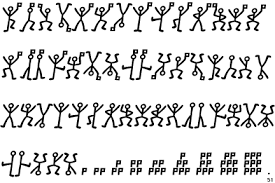
At Bletchley Juniors Codebreaking Club this week we used the Dancing Men Cipher, from the Sherlock Holmes short story of the same name.

dancing

Our activity was to make a set of Ancient Greece Top Trumps playing cards. I had made the cards, featuring an image, a description and the statistics, but without the name of the god, goddess, mortal or creature. The children had to decode the name using the cipher, then write it on the card. There were 34 cards in total, which the children completed between them. We then had a game of Top Trumps. The magic category was the most popular.  We finished with a matching pairs memory game: the pairs were all characters from Ancient Greece. These activities really helped to consolidate the children’s growing knowledge of Ancient Greece mythology.

St Thomas of Canterbury, 24 May 2019

At Bletchley Juniors Codebreaking Club this week we practised some vexillology i.e. the study of flags. I bought some Harry Potter World theme park maps. I then wrote a sequence of instructions to navigate the way around the theme park. I added North and West coordinates to the maps. I then encoded the locations of various places on the map using flag designs, with colours representing numbers. The children were able to successfully decode the flag colours as map coordinates, then read the coordinates on the map to find the location. I threw in some questions about each location, to extend those children who were Harry Potter fans. The other children enjoyed the combination of flags and maps, and having their first go at reading map coordinates.

St Thomas of Canterbury, 17 May 2019

At Bletchley Juniors Codebreaking Club this week I introduced the children to a Cardan Grille, making sure they knew that this use of the grille refers to a type of window not to a way of cooking sausages.

I explained that the grille can be used eight different ways i.e. it has two faces, and can be rotated four times.  The activity this week was collective nouns e.g. a pride of lions. I prepared squares containing 36 letters in a 6 x 6 square. I made grilles with 12 windows. I arranged the letters so that in only one of the eight possible options was there a word that made sense. The words were all the nouns i.e. animals, birds or fish. Once the children had decoded the set of nouns, I gave them pictures to match to the nouns.

cardan grille2
My grille looked a bit like this, except with 12 windows. 

The next task was to decode the collective words. I had encoded these using Shadow’s Code, which we used several weeks ago but had not been seen by some of the children who have joined our club since then. Once the collective words were decoded, the children had to match this to the noun.  This was the hardest part of the activity and required a bit of a steer from us. 

Some of our favourite collective nouns were: a smack of jellyfish; a crash of hippos; a shiver of sharks, and a fever of stingrays.